
Coastal Vegetation of the Gulf of California
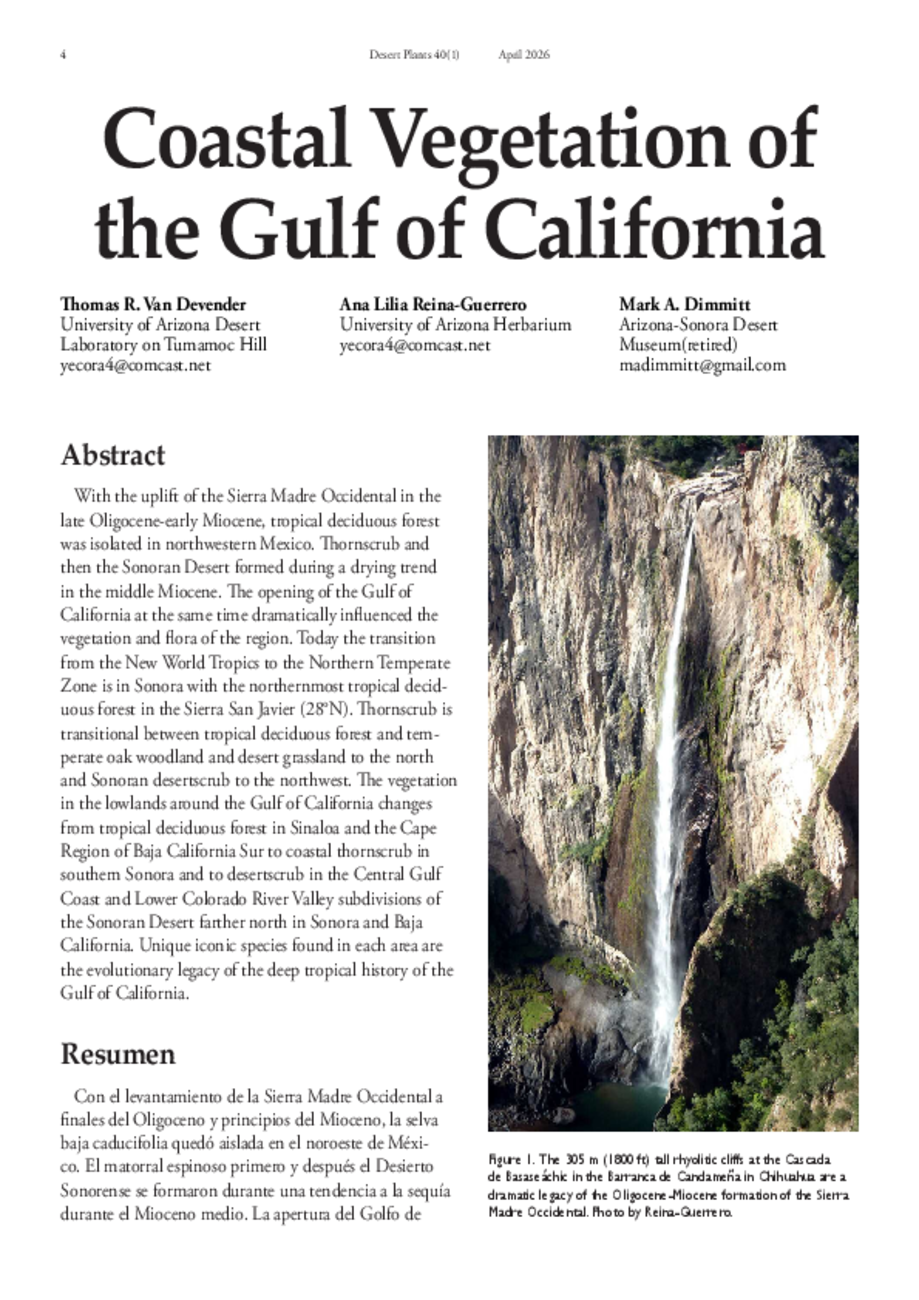
With the uplift of the Sierra Madre Occidental in the late Oligocene-early Miocene, tropical deciduous forest was isolated in northwestern Mexico. Thornscrub and then the Sonoran Desert formed during a drying trend in the middle Miocene. The opening of the Gulf of California at the same time dramatically influenced the vegetation and flora of the region. Today the transition from the New World Tropics to the Northern Temperate Zone is in Sonora with the northernmost tropical deciduous forest in the Sierra San Javier (28°N). Thornscrub is transitional between tropical deciduous forest and temperate oak woodland and desert grassland to the north and Sonoran desertscrub to the northwest. The vegetation in the lowlands around the Gulf of California changes from tropical deciduous forest in Sinaloa and the Cape Region of Baja California Sur to coastal thornscrub in southern Sonora and to desertscrub in the Central Gulf Coast and Lower Colorado River Valley subdivisions of the Sonoran Desert farther north in Sonora and Baja California. Unique iconic species found in each area are the evolutionary legacy of the deep tropical history of the Gulf of California.