
About Sonora, Mexico
 Sonora is a biologically diverse state! The southeast has genuine tropical forest–some of the northernmost tropical forest in the world. By contrast far northwest Sonora has vast sand dunes and seemingly endless plains of creosote, often receiving a few inches of rain annually. There are bits of Chihuahuan Desert and even full-fledged plains grassland in the northeast part of the state.
The eastern flank of the state is mountainous, transitioning from Sky Islands in the north to the Sierra Madre Occidental as you move southward. Rocky Mountain species mix in Sonora's northeastern mountains with Madrean species that dominate the Sierra Madre.
Much of the foothills of the Sierra Madre and other central and southern areas of Sonora are dominated by Sinaloan Thorn-scrub, a transition zone between Tropical Deciduous Forest and Sonoran Desert.
Sonora also has a long and beautiful coastline, of which many parts are surprisingly wild for this modern age, although this has been changing for some time.
There are mangrove swamps and coastal river plains that are incredibly productive and important resources for migratory birds. Most coastal river plains in Sonora have been converted into some of the most productive agricultural areas in the world, but are no longer able to support the vast assemblages of wildlife that historically inhabited them.
Sonora has mangrove-filled estuaries almost as far north as Puerto Libertad. Shockingly there is evidence that crocodiles inhabited the Gulf of California in places, including the Colorado river delta into the 1900's.
The coastline and sea life of the Gulf of California are also incredibly diverse. Cousteau described the Gulf as "the world’s aquarium". The gulf's waters are experiencing over-fishing, destructive shrimping, and numerous other forms of extraction. Another issue for the Gulf's ecosystem is the lack of fresh water, sediment, and nutrients flowing into the northern delta area from the Colorado River, seriously impacting the whole food chain and web of life in the Gulf. A great group out of Puerto Piñasco (CEDO) works to protect the Gulf of California and its wildlife.
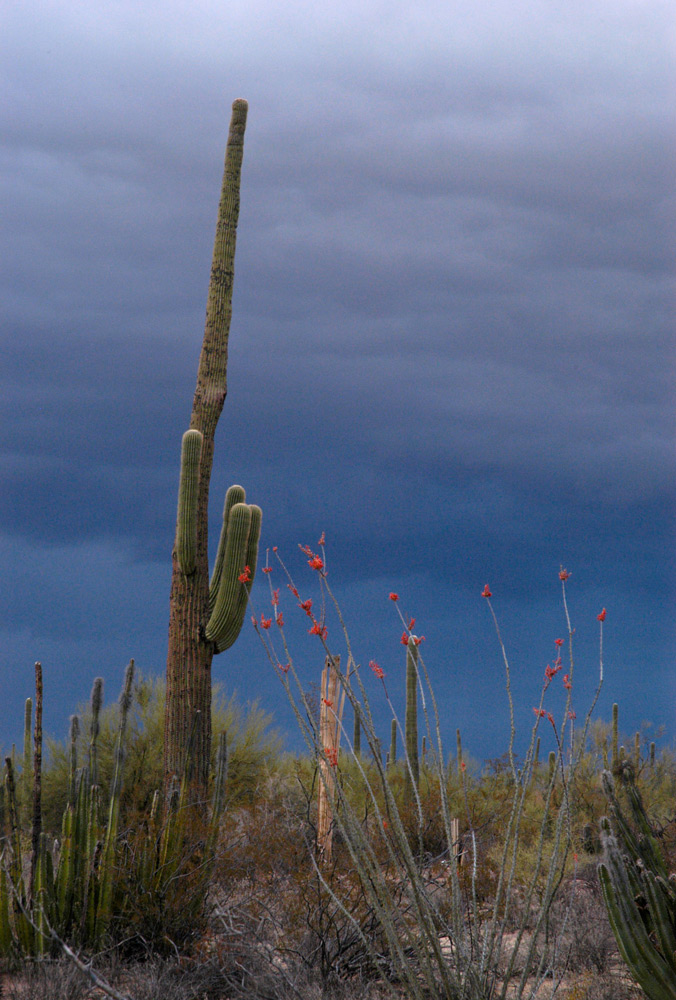
Last, but certainly not least (since it covers about half of the state!), is the Sonoran Desert, which has several different subdivisions in Sonora–Central Gulf Coast, Lower Colorado River Valley, Arizona Uplands, and Plains of Sonora. It is considered the "wettest" desert in the world. The Sonoran Desert is a lush, diverse, and beautiful desert and has a knack for capturing the hearts of most who spend time with it. Much of the Sonoran Desert's special character is due to its neotropical influences and that it receives bi-seasonal rainfall, as well as occasional tropical storm moisture in the late summer and fall.
Sonora, although changing fast, still has a "wild west" feel in many areas. A decent amount of the state is still accessible only by dirt road, or less. It is lightly inhabited compared to most of Mexico.
The people of Sonora are friendly and hospitable. Sonora has wonderful culture. In recent years many people looking for a better life have migrated north, many of whom get stuck in border towns such as Nogales working in maquiladoras, or in the economic corridors of Route 15 and Route 2. The population and economy of Sonora has been growing quickly in recent decades, along with towns and infrastructure.